Entries tagged as My take on life
Your spending power is less than what you think
Your income is not as much as you think it is. Let me show you why using the numbers from the US Census Bureau for Santa Clara county
Median household income (in 2013 dollars) is $91,702 .However, note that this is not the amount that comes into the bank. The employer deducts the federal tax from this. A rough estimate of the income tax would be 27% (standard deductions, no dependents). This leaves $66942.46 .
After the Federal government takes its cut, the state government levies the state tax on the income. For California this would be 8%. This leaves $61587.06 .
Now let us calculate how many hours someone needs to work to get $61587.06 into the bank. A workday is 8 hours. Mean travel time to work in(minutes), is 25 minutes. Let us assume that he/she gets 21 days of vacation. This means that including the commute hours, subtracting vacation hours and assuming 5 days a week, he/she work 2069.55 hours annually.
So, your hourly earning rate is 61587.06/2069.55 = $29.75. Read that again: the median hourly earning rate is $29.75 . If you do not account for the tax cut and the time you spend in commute, you will believe that your hourly earning rate is 46.65 . However, that is not what an employee earns.
Next, let us see how this converts to buying power. Suppose someone with median income wants to buy shoes with a sticker price $100. The sales tax in California is 8%. What this means is that he/she end up spending $108 on the shoes. To earn $108 , this person needs to work for 3.6 hours.
I have made a spreadsheet to make this calculation easier. . If you want to figure out your spending power, create a copy of the spreadsheet and fill in the cells with numbers that apply to you.
Some ballpark numbers (for California):
- if your annual income is $50,000 , you need to work 6.7 hours to spend $100
- if your annual income is $100,000, you need to work 3.3 hours to spend $100
Thoughtstream 2013-08-13
On hipsters
The difference between a hipster and a geek
This is the major difference between a hipster and a geek: When a hipster sees someone else grooving on the thing they love, their reaction is to say “Oh, crap, now the wrong people like the thing I love.” When a geek sees someone else grooving on the thing they love, their reaction is to say “ZOMG YOU LOVE WHAT I LOVE COME WITH ME AND LET US LOVE IT TOGETHER.”
Hipsters On Food Stamps, Part 1 has a line that precisely captures what I think about obsessively posting pictures of food
There's plenty of attention to style, to identity, and regression to our most primitive instinct: eating, fetishized.On buying
An Interview With Craigslist's Notorious Google Glass Hater
I hate commodity fetishization. I don't mean that in the Marxist sense. I mean the process of deriving of pleasure from the purchase of commercial goods above and beyond the actual value or utility of the product.
They’re our servants, tools
"You can see that our real problem is another thing entirely. The machines only do figuring for us in a few minutes that eventually we could do for our own selves. They’re our servants, tools. Not some sort of gods in a temple which we go and pray to. Not oracles who can see into the future for us. They don’t see into the future. They only make statistical predictions—not prophecies. There’s a big difference there, but Reinhart doesn’t understand it. Reinhart and his kind have made such things as the SRB machines into gods. But I have no gods. At least, not any I can see."
Kurt Cobain: The Rolling Stone Interview
Came across a an interview with Kurt Cobain, that was published in Rolling Stones magazine in January, 1994.
About himself,
"I just hope," Cobain adds, grinning, "I don't become so blissful I become boring. I think I'll always be neurotic enough to do something weird."
On "Teen Spirit"
But I think there are so many other songs that I've written that are as good, if not better, than that song, like "Drain You." That's definitely as good as "Teen Spirit." I love the lyrics, and I never get tired of playing it. Maybe if it was as big as "Teen Spirit," I wouldn't like it as much. .
.
.
"Teen Spirit" was such a clichéd riff. It was so close to a Boston riff or "Louie, Louie."
Where did the line "Here we are now, entertain us" come from?
That came from something I used to say every time I used to walk into a party to break the ice. A lot of times, when you're standing around with people in a room, it's really boring and uncomfortable. So it was "Well, here we are, entertain us. You invited us here."
On Axl Rose (this just makes me smile)
A few years ago, we were in Detroit, playing at this club, and about 10 people showed up. And next door, there was this bar, and Axl Rose came in with 10 or 15 bodyguards. It was this huge extravaganza; all these people were fawning over him. If he'd just walked in by himself, it would have been no big deal. But he wanted that. You create attention to attract attention.
About the band's music
We have failed in showing the lighter, more dynamic side of our band. The big guitar sound is what the kids want to hear. We like playing that stuff, but I don't know how much longer I can scream at the top of my lungs every night, for an entire year on tour. Sometimes I wish I had taken the Bob Dylan route and sang songs where my voice would not go out on me every night, so I could have a career if I wanted.
About the future of his music
It's impossible for me to look into the future and say I'm going to be able to play Nirvana songs in 10 years. There's no way. I don't want to have to resort to doing the Eric Clapton thing. Not to put him down whatsoever; I have immense respect for him. But I don't want to have to change the songs to fit my age [laughs].
Defined tags for this entry: music, My take on life
Guns and Roses
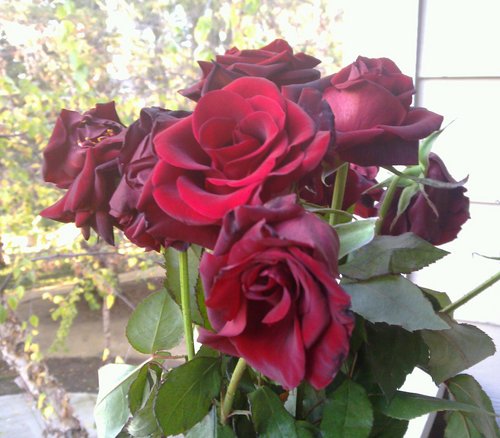
Today is my Significant Other's birthday. Some measure of romance was added by these flowers that I put on the bedside for her in the morning 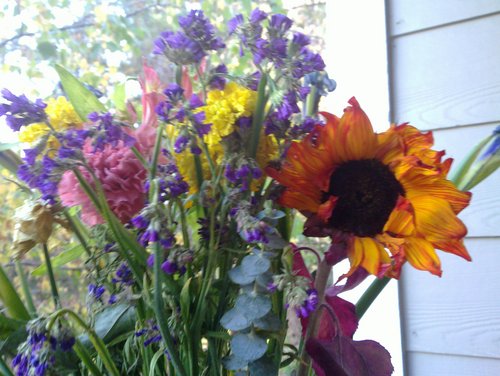
 I treated her to a full day of fun.
First, I took her shopping to a few of her favorite stores and gracefully took the burnt  .
.
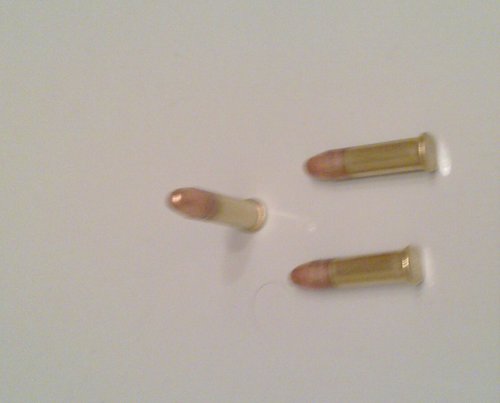
Next stop was at the shooting range, where we fired some rounds.
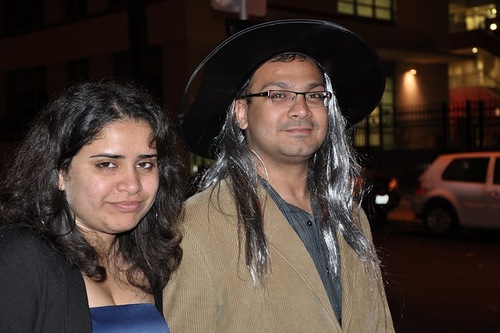
Today also happened to be the Halloween. We dressed up for the night and had dinner at a nice San Francisco restaurant on Valencia street. In case you are wondring, I dressed up as a well groomed man-witch. Throughout the dinner we were entertained by the Halloween party goers in their well done costumes.
Defined tags for this entry: My take on life, today
Shadow and light
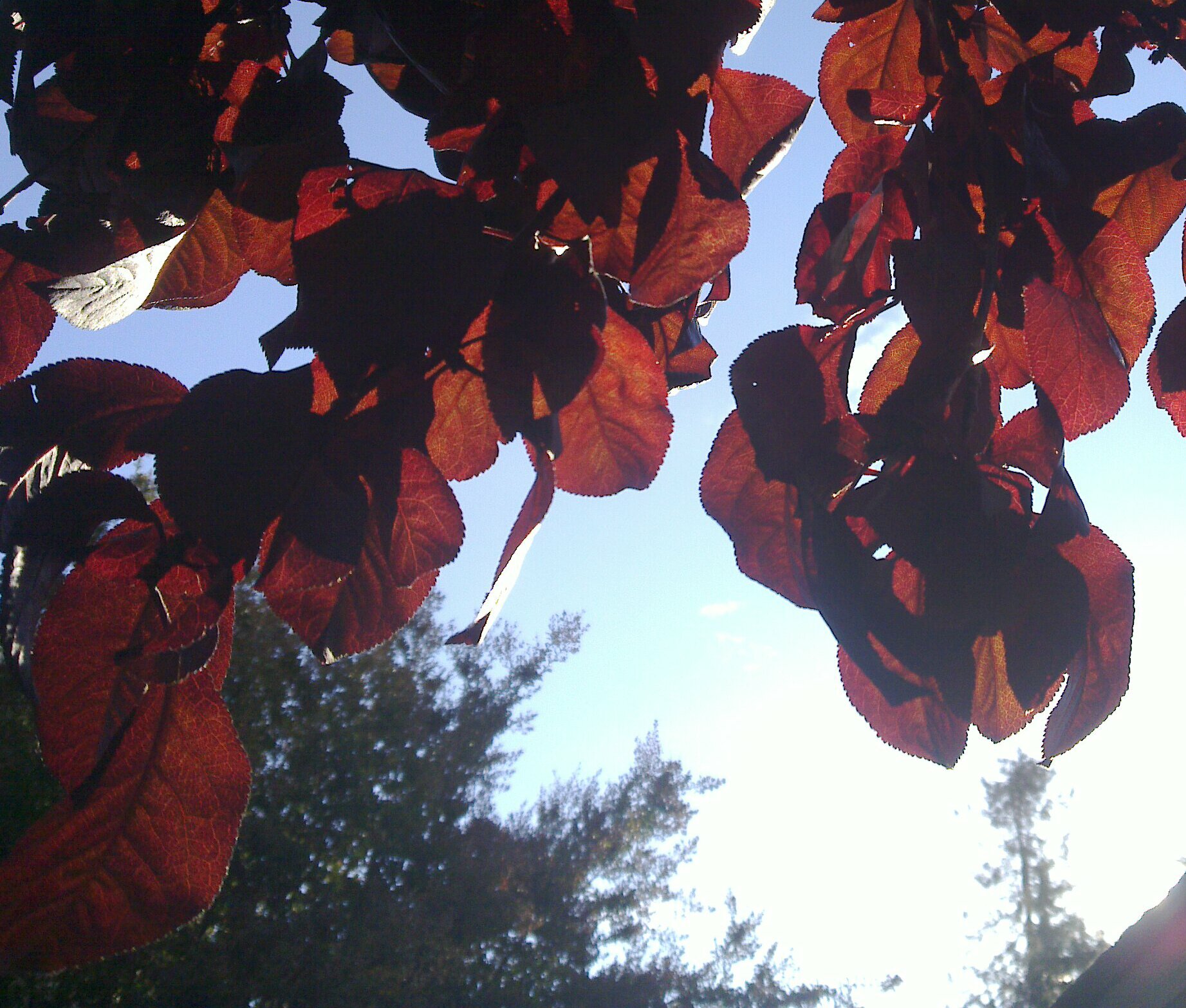
Saw this beautiful sight on my way to the office.
I also saw a rather worrying sight. The car ahead of me changed lanes near a traffic light in a slightly wobbly manner. I slowed down and peeked inside the car to see what was going on. The "driver" had a book open on the steering wheel and was reading that.
Defined tags for this entry: My take on life, today
Page 1 of 14, totaling 97 entries